
FIAT cars can be a practical choice for UK drivers who want compact dimensions, distinctive styling and manageable everyday running costs, but the best model depends on your driving habits, budget and maintenance expectations.
Before buying, compare fuel economy, reliability, insurance, servicing requirements and used-car condition to understand the true cost of ownership.
If you are considering a pre-owned model, exploring a reputable used car showroom can help you compare available FIAT vehicles and find one that suits your needs.
From the city-friendly FIAT 500 to the family-oriented FIAT Tipo, the brand has offered several models aimed at different types of drivers. Understanding their features, strengths and potential drawbacks can help you make a more informed buying decision.
FIAT, an Italian automotive brand, is widely associated with compact cars designed for urban driving. Its smaller models are particularly appealing to motorists who regularly navigate narrow streets, busy town centres and restricted parking spaces.
Many FIAT cars offer distinctive Italian styling, straightforward controls and efficient small-capacity engines.
Depending on the model and specification, buyers may also find touchscreen infotainment, smartphone connectivity, parking sensors and driver-assistance features.
However, equipment, engine options and availability vary by model year. Buyers should check the specifications of the exact vehicle rather than assuming every FIAT offers the same features.
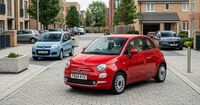
The FIAT 500 is one of the brand's best-known models, recognised for its retro-inspired styling and compact dimensions. It is particularly suitable for city driving, commuting and short everyday journeys.
Older petrol versions can appeal to buyers seeking an affordable used small car, while newer versions have included mild-hybrid and fully electric options, depending on the generation.
Best for: Urban drivers, first-time buyers and motorists who prioritise style and easy parking.
Things to consider: Rear-seat space and boot capacity are limited compared with larger hatchbacks. Before buying an older example, check its service history, clutch condition where applicable, tyres and electrical equipment.
The FIAT Panda is a practical small car with a taller body and a flexible interior. Its compact footprint makes it convenient for town driving, while its upright seating position can improve everyday usability.
Depending on the generation, buyers may find petrol, mild-hybrid or other engine options. Certain older versions also feature four-wheel drive, although these are less common and may cost more to maintain.
Best for: Drivers who want a compact car with useful interior space and straightforward practicality.
Things to consider: Check the condition of the suspension, brakes, tyres and electrical systems. On older cars, investigate any warning lights or unusual noises before committing to a purchase.
The FIAT Tipo offers more interior and boot space than smaller models such as the 500. Available in different body styles depending on the model year, it can suit small families, commuters and drivers who regularly carry passengers or luggage.
Petrol and diesel variants have been offered in various markets and model years, so availability in the UK depends on the specific vehicle.
Best for: Buyers who need a more spacious car without moving into a larger vehicle category.
Things to consider: Diesel versions may be less suitable for frequent short journeys because diesel particulate filters can experience problems when the vehicle does not regularly reach the conditions needed for regeneration. Check the engine, emissions system and maintenance records carefully.
The FIAT 500X is a crossover that combines styling inspired by the 500 with a higher driving position and more space. Depending on its specification, it may offer additional comfort and convenience features compared with smaller FIAT models.
Best for: Drivers who prefer crossover styling, a raised seating position and greater everyday versatility.
Things to consider: Larger vehicles can have higher tyre, fuel and servicing costs than small city cars. Check the gearbox, engine history, suspension and electronic systems, particularly on older examples.
Fuel economy varies significantly according to the model, engine, transmission, age and driving conditions.
A small petrol FIAT may be economical for urban journeys, but frequent stop-start traffic can increase consumption. Motorway driving, passenger loads, tyre pressures and driving style also affect real-world results.
Electric models, including the electric FIAT 500, have no petrol consumption, but their efficiency depends on driving conditions, temperature, speed and use of heating or air conditioning.
Charging costs will depend on electricity tariffs and whether you charge at home or use public charging points.
When comparing vehicles, use these steps:
Avoid choosing a car based solely on its advertised economy. The most economical option for your circumstances is the one that performs efficiently across your typical journeys.
FIAT servicing costs depend on the model, engine, age, mileage and garage rates. Smaller cars may have relatively affordable routine maintenance, but repairs to neglected vehicles can quickly outweigh any savings on the purchase price.
Common ownership expenses include:
Electric FIAT models do not require engine oil changes, but they still need tyre, brake, suspension and other scheduled checks.
Battery health, charging equipment and remaining warranty coverage are also worth investigating when buying used.
To budget accurately, obtain a service quote for the exact model and engine rather than relying on a general estimate.
FIAT reliability varies by model, generation, engine and maintenance history. It is not accurate to label every FIAT unreliable or assume every example will be inexpensive to own.
A well-maintained car with complete service records may be a better purchase than a newer vehicle with unclear history.
Before buying, review its MOT history, check for outstanding recalls, inspect the vehicle and arrange an independent mechanical inspection if you are unsure about its condition.
For used FIATs, pay attention to warning lights, fluid leaks, unusual engine or suspension noises, clutch behaviour and the operation of electrical features. A thorough test drive can reveal issues that are not obvious from photographs or a short walkaround.
Use this checklist before making a decision:
FIAT cars can make sensible everyday vehicles for UK motorists, particularly those who value compact dimensions, distinctive styling and practical urban transport.
The FIAT 500 suits many city drivers, the Panda offers flexible small-car practicality, and models such as the Tipo and 500X provide alternatives for buyers who need more space.
The best choice ultimately depends on your budget, driving requirements and the condition of the individual vehicle.
By comparing fuel economy, maintenance needs, reliability records and total ownership costs before buying, you can select a FIAT that fits your lifestyle without overlooking potential expenses.


Комментарии